
The Emerald City's Baseball Cathedral: Reviewing T-Mobile Park
by casey green 10/28/2026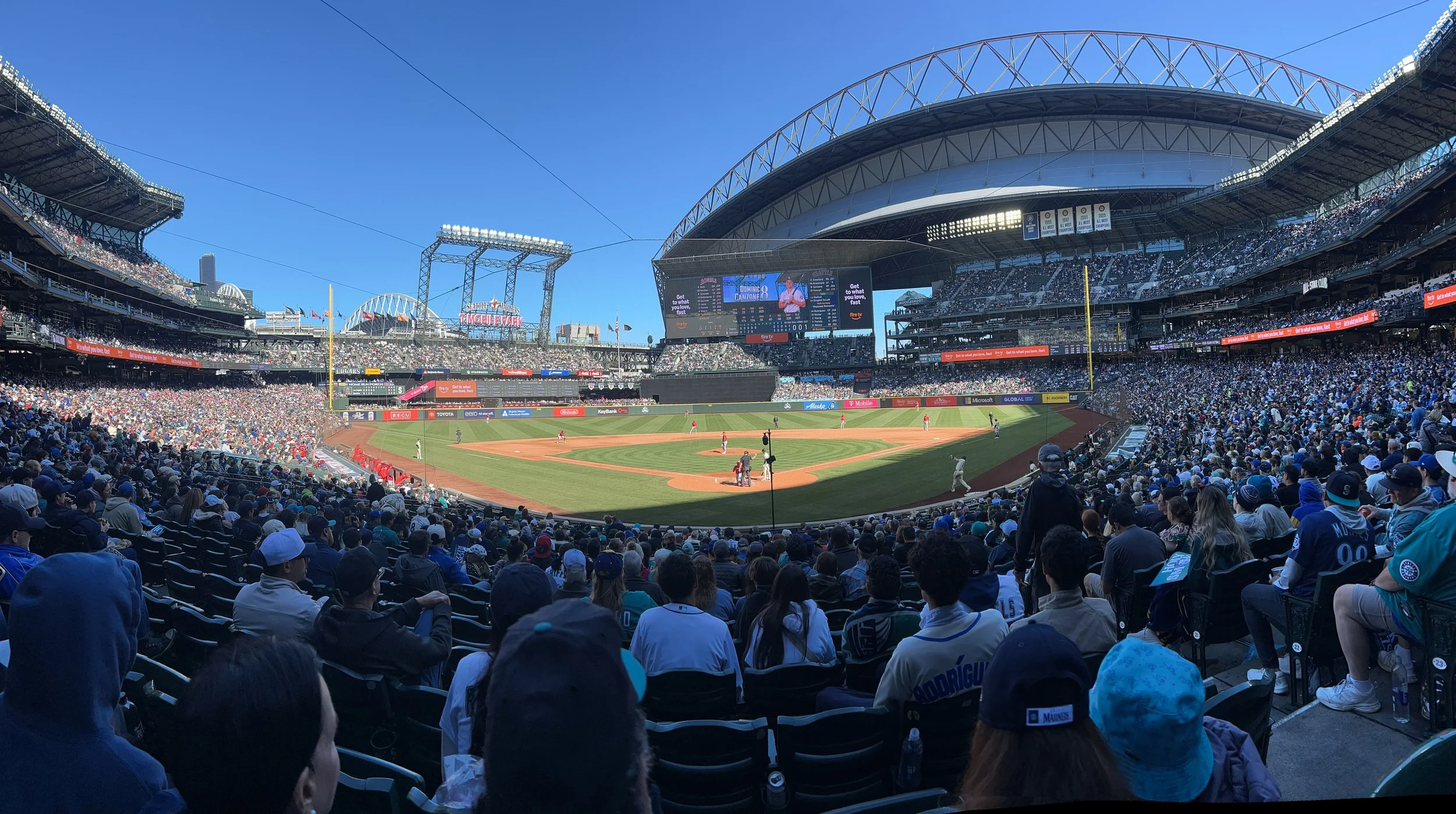
Photo by casey greenWhat makes a baseball stadium worth visiting when the game itself means absolutely nothing? At T-Mobile Park, I discovered that the answer goes far beyond what happens on the diamond.
For nearly a decade, T-Mobile Park stood among the most expensive stadium construction projects in Major League Baseball, until the opening of the new Yankee Stadium in 2009. With its retractable roof, scenic location, and one of baseball's most passionate fan bases, I had high expectations heading into my visit.
I had the opportunity to attend the Seattle Mariners' regular-season finale against the Los Angeles Angels. With both teams eliminated from postseason contention, the game carried virtually no playoff implications. Despite the lack of stakes, I was pleasantly surprised by the impressive turnout and enthusiasm from Mariners fans.
However, a stadium experience goes well beyond the atmosphere created by its fans. From accessibility and seating to concessions, architecture, and unique attractions, there is plenty to consider when evaluating a ballpark. Here is my full review of T-Mobile Park and what fans can expect when visiting Seattle.
Getting to the Stadium
One of the first factors to consider when visiting any stadium is accessibility, and T-Mobile Park provided a relatively stress-free experience.
On this particular day, there was no Seattle Seahawks game taking place next door at Lumen Field, which likely helped keep traffic manageable. The area surrounding T-Mobile Park offers numerous parking garages, surface lots, and street parking options, making it relatively easy to find a spot and get to the stadium.
Of course, this experience could vary significantly depending on the day. With two major professional sports venues located next to each other, traffic and parking could become much more challenging when events overlap. However, based on my visit, getting to and from the stadium was a pleasant experience with very few complications.
Stadium Features, Architecture, and Unique Experiences
Upon entering T-Mobile Park, one of the first things that caught my attention was the sheer number of concession stands, food vendors, and merchandise shops scattered throughout the stadium. Whether you're looking for a quick snack, a full meal, or some Mariners gear, there is no shortage of options.
Unfortunately, the abundance of choices doesn't necessarily translate to affordability. Like most professional sports venues, T-Mobile Park comes with the steep prices fans have come to expect. While this isn't unique to Seattle, it is still an important consideration for families or anyone attending a game on a budget.
Beyond the standard amenities, T-Mobile Park offers several unique attractions that help distinguish it from other MLB stadiums.
One of the more interesting features is the stadium's well-known "Secret Door." Hidden within the ballpark, this attraction offers fans the opportunity to purchase a specialty cocktail that changes depending on the game. However, availability is extremely limited, with roughly 60 drinks offered per game when the experience is operating. Fans hoping to try one should arrive early, as the limited supply makes it a popular attraction.
Another standout feature is the rooftop Trident Deck, which provides a stunning view of Puget Sound and the surrounding Seattle landscape. While the baseball field is naturally the main attraction, having a scenic space to step away from the action adds another dimension to the stadium experience.
Despite these unique attractions, one area where T-Mobile Park arguably falls short is its overall architectural identity. While the stadium is undoubtedly modern and functional, its combination of brick and exposed steel doesn't necessarily create the same cohesive or recognizable appearance found at some of baseball's most iconic ballparks. Additionally, the stadium's design doesn't always take full advantage of its surrounding environment, with much of the seating bowl feeling relatively disconnected from the Seattle skyline and waterfront. Although the Trident Deck offers an impressive glimpse of the city's natural beauty, that connection isn't consistently present throughout the rest of the ballpark.
These architectural shortcomings don't necessarily detract from the comfort or functionality of T-Mobile Park, but they do limit its visual appeal when compared with some of MLB's most celebrated venues. Nevertheless, the variety of attractions and amenities gives fans plenty of reasons to explore the stadium rather than simply head to their seats and remain there for nine innings.
Stadium Layout and Seating
While unique attractions and architectural design contribute to a stadium's identity, the most important aspect of any ballpark is how well it accommodates fans who are there to watch the game. Fortunately, T-Mobile Park excels in several areas.
One of its strongest features is the ease of navigating the stadium. Wide concourses wrap around much of the venue, allowing fans to move between sections without feeling excessively cramped. Even with a large crowd in attendance, getting around was relatively straightforward.
Another major advantage is the ability to see the field from many areas of the concourse. Rather than being completely disconnected from the game while walking around, fans can continue following the action as they explore the stadium or visit concessions. This is a small but important detail that improves the overall experience.
Finding your seat is also relatively simple, thanks to clearly marked sections and straightforward navigation throughout the ballpark.
Once seated, comfort becomes another strength. The seats feature backs and offer a bit more width than some traditional stadium seating, providing additional room to settle in and enjoy the game. Considering the slower pace and length of a typical baseball game, these details can make a significant difference.
Between the spacious concourses, clear signage, and comfortable seating, T-Mobile Park does an excellent job of making the game-day experience convenient and enjoyable. While the stadium's architecture may not be its most impressive feature, its practical design and attention to fan comfort help compensate for those shortcomings.
Fan Atmosphere and Game-Day Experience
Perhaps the most impressive part of my visit was the atmosphere created by Mariners fans.
As mentioned earlier, the game carried no postseason implications for either team. With both the Mariners and Angels eliminated from playoff contention, there was little reason to expect an especially energetic crowd for the final game of the regular season.
However, Seattle fans showed up in a big way.
With the stadium reaching approximately 93% capacity, the crowd provided an impressive atmosphere considering the circumstances. Fans remained engaged throughout the game, responding enthusiastically to hits, defensive plays, and other exciting moments.
The energy was consistent, and the stadium's entertainment and fan interactions helped keep the experience lively from beginning to end.
What stood out most was the willingness of Mariners fans to support their team even when the season's outcome had already been decided. It's easy for a fan base to generate excitement during a playoff race or a meaningful late-season matchup, but maintaining that enthusiasm for a relatively meaningless game says something about the loyalty of the supporters.
While the atmosphere may not have reached the intensity of a postseason matchup or a major rivalry game, it exceeded my expectations and became one of the highlights of the visit.
Food and Concessions
Food is an essential part of the baseball experience, and T-Mobile Park offers one of the more diverse selections I've encountered at a sporting venue.
The Pacific Northwest is known for its craft beer culture, and the stadium reflects that reputation with a wide variety of beer selections. There are also numerous cocktail options for adult fans, alongside the usual nonalcoholic beverages.
The food selection is equally extensive.
Fans looking for traditional ballpark concessions will find plenty of familiar options, including hot dogs, nachos, ice cream, and other stadium staples. However, T-Mobile Park also offers a variety of more distinctive choices that reflect Seattle's local food culture.
One example is the Seattle-style hot dog, a regional specialty that gives fans an opportunity to try something different from the standard ballpark fare.
Perhaps the most unusual option is the toasted grasshoppers, easily one of the strangest concession items I've encountered at a sporting event. While they might not appeal to everyone, their presence highlights the stadium's willingness to offer something outside the ordinary.
The stadium also features several recognizable restaurants and specialty food vendors. During my visit, I noticed Hawaiian-inspired comfort food, Salt & Straw ice cream, and MOTO Pizza, which served what I would consider some of the best pizza I've ever had.
MOTO Pizza was a particular highlight of my visit and an option I would strongly recommend to anyone attending a Mariners game.
The biggest drawback, once again, is pricing. While the variety and quality of options are impressive, purchasing food and drinks can quickly become expensive, particularly for families.
Nevertheless, the range of concessions is one of T-Mobile Park's greatest strengths. Whether you're interested in traditional baseball food or something more adventurous, there is likely an option that suits your preferences.
Final Thoughts: Is T-Mobile Park Worth Visiting?
Overall, T-Mobile Park provided an excellent experience for both me and my family, and it is a stadium I would recommend to anyone interested in exploring different MLB ballparks.
Baseball offers a different type of viewing experience than sports such as football or basketball. With a more relaxed pace and opportunities to explore the venue throughout the game, the surrounding environment plays a major role in the experience. T-Mobile Park embraces that aspect of baseball particularly well, offering comfortable seating, spacious concourses, and an impressive selection of concessions and attractions.
Perhaps the biggest highlight was the atmosphere. Despite attending a game with no postseason implications, I witnessed an engaged and passionate fan base that helped make the experience memorable. Seattle is home to several major professional and collegiate sports teams, meaning the Mariners share the spotlight with other popular franchises. However, the impressive turnout during my visit demonstrated that the team maintains a dedicated following regardless of its place in the city's broader sports landscape.
That said, the stadium isn't without its drawbacks. Concession prices are steep, and while getting to the stadium was relatively easy during my visit, parking and traffic could present greater challenges on busier event days. More importantly, T-Mobile Park's architecture doesn't quite capture the same distinctive character found at some of baseball's most celebrated venues. Although its modern amenities and functional design make it an excellent place to watch a game, the stadium lacks some of the visual identity and connection to its surroundings that can elevate a great ballpark into a truly unforgettable one.
My Final Rating: 8/10
T-Mobile Park delivers an excellent overall baseball experience through its comfortable seating, diverse concessions, unique attractions, and passionate fan base. While its architectural shortcomings and some of the costs associated with attending a game prevent it from reaching the very top of my personal stadium rankings, the positives comfortably outweigh the negatives.
For anyone traveling to Seattle or looking to experience a new MLB stadium, T-Mobile Park is absolutely worth visiting.